Green Communities: Sustainable Education for a Better Future
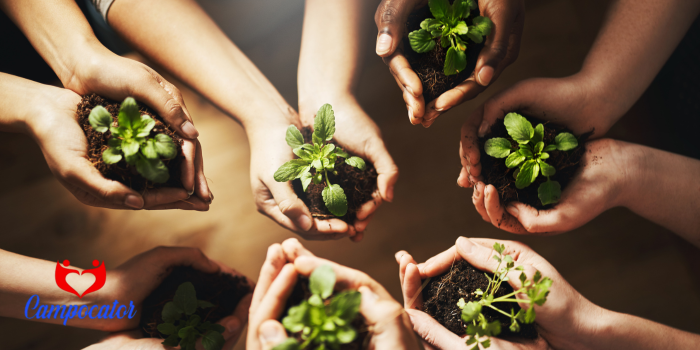
Climate change is no longer a threat, but a certainty that is increasing the risks to human life on the planet. To try to contain this advance, education is an important weapon, promoting more sustainable ideas and systems.
Green communities are key players in raising environmental awareness. Combined with education, they can guide society towards a greener lifestyle. After all, through learning, individuals in the community become empowered with the knowledge, skills, and values needed to promote environmental transformation.
Around the world, the number of schools, universities, and educational institutions preparing to tackle climate change is increasing. Actions are starting to be taken, going beyond the role of academic instruction on the problem.
But how exactly do green communities work in education? How can an educational institution go beyond traditional environmental awareness campaigns and really start to incorporate sustainability? What is the role of students, teachers, parents, and local communities in this change? These questions are driving a reimagined education, not just as preparation for life, but as an essential tool for leveraging society and contributing to the health of the planet.
The Concept of Green Communities
First and foremost, so-called “green communities” are not just about environmental conservation. These initiatives also represent a more holistic approach to life, encompassing sustainable practices, but also social equality and economic balance. Green communities also prioritize renewable energy sources, sustainable transport, and green spaces.
Behind major actions, education is the backbone of green communities. Through this powerful alliance, the culture of sustainability is promoted from early childhood to adulthood.
UNESCO’s Greening Education Partnership
In recognition of the potential of education to transform society, UNESCO launched the Greening Education Partnership . The main goal of the program is to incorporate sustainability into all levels of education.
The Greening Education Partnership is based on these four pillars:
Greening Schools: Educational institutions are being adapted to fit a model that promotes sustainability in infrastructure, teaching, and eco-friendly operations.
Greening Curricula: Environmental education is included in the subjects to encourage critical thinking and problem-solving related to sustainability.
Greening Teacher Training : Educators are trained to adopt green concepts in their classes and activities.
Greening Communities : Ecological practices go beyond the classroom, with actions that also involve the whole community.
When applied collectively, the four pillars ensure that students of all ages are up-to-date on environmental challenges. Only then will these young people be better prepared to contribute to sustainable development.
Benefits of Green Communities on Education
Enhanced Environmental Literacy: When sustainability is integrated with education, it tends to increase awareness and understanding of environmental issues. From this integration, decision-making in relation to the environment is better informed.
Community Engagement: Community members become involved in educational initiatives that promote a collective sense of responsibility and action in favor of sustainability.
Economic Opportunities : Ecology-based education can lead to the development of green jobs and more sustainable economic practices in communities.
Improved Health and Well-being : Green spaces and sustainable practices become more accessible, benefiting the physical and mental health of individuals in the green communities.
Resilience to Climate Change : Communities are educated so they can be better prepared to adapt to and mitigate the impacts of climate change.
Strategies for Developing Green Communities through Education
Curriculum Development: Sustainability topics are embedded in all subjects and educational levels.
Professional Development: Educators are trained to effectively teach sustainability concepts.
Community Partnerships: Collaboration between organizations, companies, and local governments to support sustainable initiatives.
Infrastructure Investment: Green spaces, renewable energy buildings, and sustainable transport are developed and maintained.
Policy Implementation: Policies are created and enforced to support environmental education and sustainable community development.
Eco-Schools Program
Eco-Schools is a program that empowers students to lead sustainability projects in their schools. This global initiative operates in more than 100 countries around the world, following a seven-step structure.
1. Eco Committee
The students lead a group made up of themselves, school staff, parents, and members of the community. The group is primarily responsible for leading the Eco-Schools project through regular meetings to plan and communicate the sustainability actions to be taken.
2. Sustainability Audit
An assessment is made of the school’s environmental and social impact on the community. As many students as possible are involved, and the main current issues are analyzed. Through the results, it is possible to identify which areas need improvement.
3. Action Plan Development
Using the results of the audit as a basis, three main themes are chosen to be the focus of the project. From a clear focus, clear goals, SMART tasks, deadlines, and responsibilities are then outlined.
4. Monitor and Evaluate
The progress of the Action Plan should be monitored and, if necessary, adjusted. The students take the lead in monitoring. At the end, the results are then shared with the whole school.
5. Link to the Curriculum
Within the classroom, sustainability topics are addressed by educators. In this way, students are encouraged to understand real environmental and social challenges through lessons and activities.
6. Inform and Create Green Communities
The school and community are kept up-to-date and engaged with the project. Events, exhibitions, newsletters, and creative activities are held in order to share the progress and also to encourage people to get involved.
7. Eco Code
A clear statement is drawn up, with the help of the students, including a reflection on the school’s sustainability goals. Finally, the statement is displayed visibly throughout the school. It should be reviewed regularly from time to time to check whether the actions still make sense and which ones need to be reinforced.
Challenges and Solutions
Green communities, alongside education, work on the following challenges and solutions:
Challenge : Limited Resources
Solution : Partnerships between NGOs, government programs, and private sector sponsors to finance sustainable projects.
Challenge : Resistance to Change
Solution : Training and awareness programs to educate communities about the benefits of eco-friendly initiatives.
Challenge : Lack of Expertise
Solution : Collaboration between environmental experts and organizations to guide and implement sustainable actions, providing technical support.
Building a Sustainable Future
The integration of green communities and educational systems is not just an idea, but a necessity for a more sustainable future. By promoting green behavior in society from an early age, future generations will be better prepared to deal with climate change.
Key Takeaways:
Holistic Approach: Sustainable principles should be part of the curriculum in schools and in community activities.
Collaborative Efforts: The cooperation of students, educators, policymakers, and community members is key to a more secure future for living conditions on the planet.
Continuous Improvement: Ongoing evaluations and adaptations guarantee the effectiveness of ecological initiatives.
The alliance between green communities and education is a powerful approach to achieving sustainable development goals. By inspiring environmental awareness in education and community life, the number of informed, engaged, and resilient populations increases.
The years are passing, and climatic conditions are becoming a real threat to the future of humanity on planet Earth. The initial consequences are already being felt in the present. Only the union of education and sustainability can promote a more equitable and secure future for all of us and future generations.
There are many opportunities for children and teenagers to learn more about sustainability. With our expertise, we can introduce you to ecological programs, camps with ecological activities, and educational experiences about sustainability. Would you like to know more? Then we’ll be happy to find a program that meets your expectations.
Get in touch with our team